

Refacing, Refinishing, Modifying, or Replacing: How to Choose the Right Cabinet Update
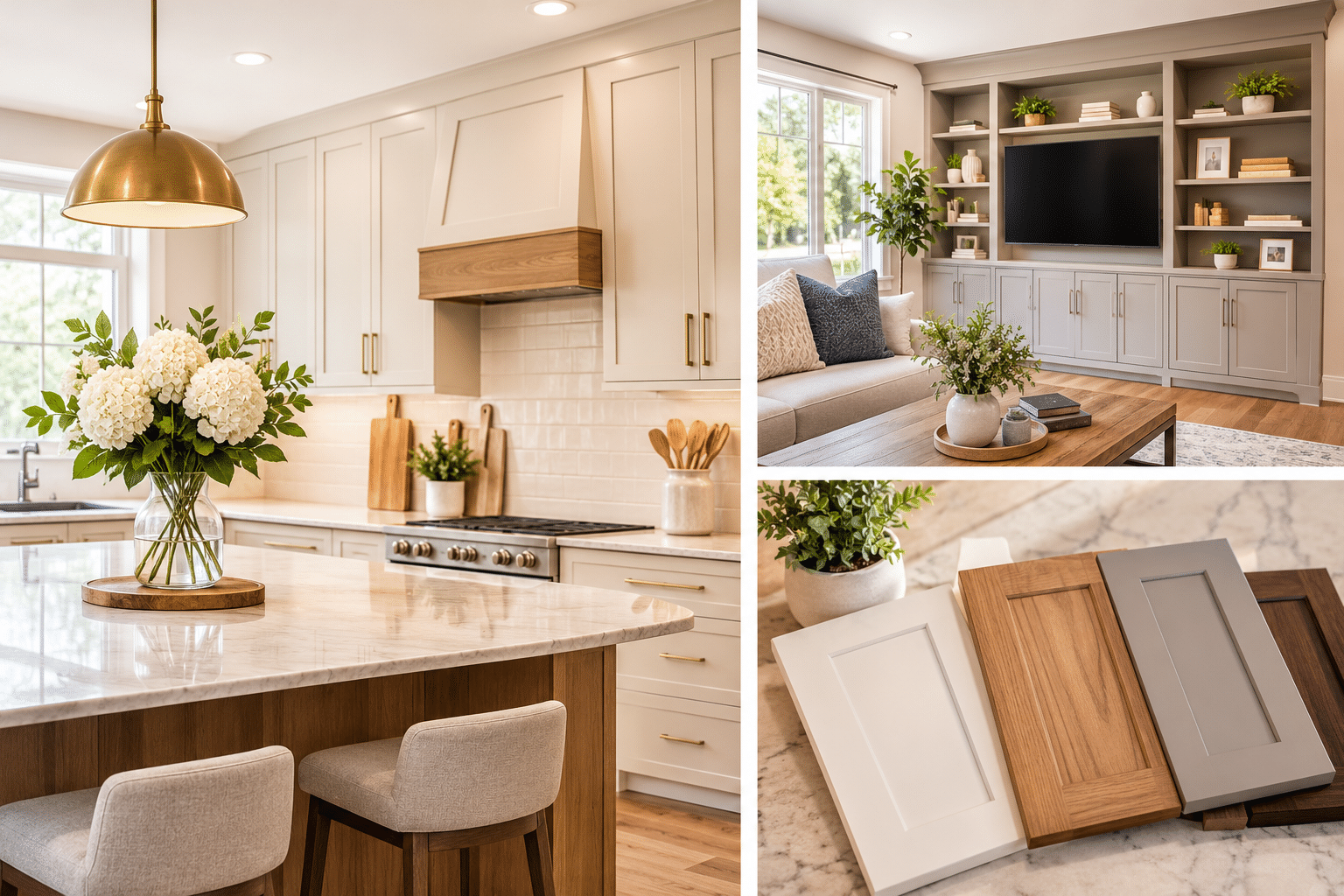
Your cabinets look tired, or they just don’t work the way your family lives. So what now? Many Edmonton homeowners assume the only answer is tearing everything out and starting over. In reality, you have four paths: refacing, refinishing, modifying, or replacing. Each one changes something different. If you have solid cabinets and want a fresh look, you may not need to replace anything at all.
Signs it’s time to update your cabinets
Not sure whether your cabinets need work? A few common signs point the way:
- Doors and drawer fronts look worn, chipped, or dated, even though the cabinets themselves are
- sturdy.
- The finish has faded, yellowed, or peeled in high-use areas.
- The layout doesn’t suit how you cook, store, or move through the room.
- A new appliance won’t fit the existing opening.
- Storage is hard to reach, or there is wasted space above the uppers.
- You want a different style, but the room’s footprint works well.
The pattern matters. If the look is the problem, refacing or refinishing may help. If function is the problem, modifications may help. If both the boxes and the layout are failing, replacement may be the better path.
Cabinet refacing: new doors, drawer fronts, and panels on your existing boxes
Think of cabinet refacing as a new face on a solid frame. The cabinet boxes stay in place. The parts you see are replaced, which can include doors, drawer fronts, visible side panels, fillers, mouldings, toe kicks, and hardware.
Because the fronts are new, you can change the whole style of the room. A flat-front door can become shaker-style. A dark finish can become cream, taupe, or natural wood. New pulls and hinges finish the look. This is the option that most often answers “I like my layout, but I’m tired of how it looks.”
Refacing works best when:
- The cabinet boxes are structurally sound.
- You like the current layout.
- You want a visible style change, not just a new colour.
This is also a form of cabinet door replacement, but it goes further. Replacing doors alone can leave worn panels and mismatched trim behind. Refacing treats the visible parts as a set so the finished cabinets look cohesive.
Cabinet refinishing: a fresh paint or stain on your existing doors
When refinishing your existing cabinets, you keep both the boxes and the existing doors and drawer fronts; the finish is what changes. Cabinets can be repainted, re-stained, or restored, depending on the material and its condition.
You may know this as kitchen cabinet painting, but refinishing covers more than paint. Stained wood cabinets can be refreshed or changed in tone. Painted cabinets can move to a new colour.
Refinishing suits you best when:
- You like the door style and the layout.
- The doors and drawer fronts are in good shape.
- Colour or finish is the main thing you want to change.
The difference from refacing is simple. Refinishing keeps your existing doors and changes their finish. Refacing replaces the doors and drawer fronts with new ones.
Cabinet modifications: changing layout, storage, or fit
Sometimes the look is fine, but the cabinets don’t work. That is where cabinet modifications come in. Modifications alter existing cabinetry to improve how it functions, without replacing the whole run.
Common examples include:
- Appliance openings: Adjusting a cabinet so a new range, fridge, or dishwasher fits.
- Pull-outs: Adding pull-out trays, pantry organizers, or garbage and recycling bins inside lower cabinets.
- Hardware upgrades: Improving access with new drawer slides, pulls, and hinges.
- Ceiling-height extensions: Adding cabinetry above existing uppers to use the empty space and give the room a more finished look.
Ceiling-height cabinet extensions are a good example of a practical update with a design payoff. They add storage for items you use less often, and they remove the dust-catching gap above the cabinets.
Modifications can also pair with refacing or refinishing. You might change the fronts and add pull-outs in the same project. If you’re searching for cabinet modifications in Edmonton, this is the path for fixing what doesn’t work without losing what does.
When full replacement makes more sense
Keeping your cabinets is not always the right call. Replacement is worth a serious look when:
The boxes are damaged, warped, or affected by moisture.
The layout needs a major change, such as moving appliances, adding an island, or opening up the room.
Too many things need to change at once for the existing boxes to make sense.
You want a size, configuration, or storage feature that the current cabinets can’t support. In those cases, new custom kitchen cabinets let you start fresh. The cabinetry is planned around your space and how you use it, including islands, pantries, tall cabinets, and appliance cabinetry. Choosing replacement is a good decision when keeping the old boxes would limit the result.
How to decide: a quick comparison of the four options
A few questions can help you choose:
- Are your cabinet boxes in good condition?
- Is the main issue how they look or how they work?
- Do you want to keep the current layout?
- Will a new appliance or need for storage change the fit?
Many projects combine approaches. Your answers often point toward one option, or a mix of two.
Next step: an on-site look at your cabinets
The best way to know which option fits is to have someone look at your cabinets in person. During an on-site visit, Mapleline can check whether your existing cabinet boxes are suitable to keep, take measurements, and talk through what you’d like to change.
If you’re ready to explore your options, book an on-site consultation with Mapleline Cabinetry. We’ll help you work out whether refacing, refinishing, modifications, or replacement is the right fit for your Edmonton home.
FAQs
What is the difference between cabinet refacing and refinishing?
Refacing replaces the doors, drawer fronts, and other visible parts with new ones while keeping your existing cabinet boxes. Refinishing keeps your existing doors and drawer fronts and changes only the finish, through paint, stain, or restoration. Refacing changes the style. Refinishing changes the colour or finish.
Can I update my kitchen cabinets without replacing them?
Often, yes. If your cabinet boxes are in good shape, refacing, refinishing, and modifications can all update how your kitchen looks or works without full replacement. An on-site visit is the best way to confirm whether your cabinets are suitable to keep.
Can existing cabinets be changed to fit a new appliance or add more storage?
In many cases, they can. Cabinet modifications can adjust an opening for a new appliance, add pull-outs and organizers, upgrade hardware, or extend upper cabinets to the ceiling. What is possible depends on the cabinets you have, so it’s worth having them reviewed in person.
How do I know if my cabinet boxes are worth keeping?
Good candidates are solid and square, with no major moisture damage, warping, or sagging. They should also suit the layout you want. If the boxes are damaged, or the layout needs a major change, replacement may make more sense. Mapleline checks this during an on-site consultation.
Do these options only apply to kitchens?
No. Kitchens are the most common starting point, but the same thinking can apply to bathroom vanities and other cabinetry around the home, where the existing cabinets are suitable. Mapleline also works on residential and commercial spaces.